Anti-detect browsers have become essential tools for affiliate marketers, media buyers, and e-commerce sellers running operations at scale in 2026.
But one question keeps coming up: are they actually legal to use? Short answer: yes, anti-detect browsers are legal software.
However, what you do with them can cross legal lines fast. Over 30% of affiliate marketers have faced account bans or suspensions due to browser fingerprinting and behavioural tracking. That makes understanding legality not just smart but necessary for protecting your income and business.
Let us break down exactly where the law stands, what risks exist, and how you can use these tools without getting into trouble.
What Is an Anti-Detect Browser and How Does It Work?
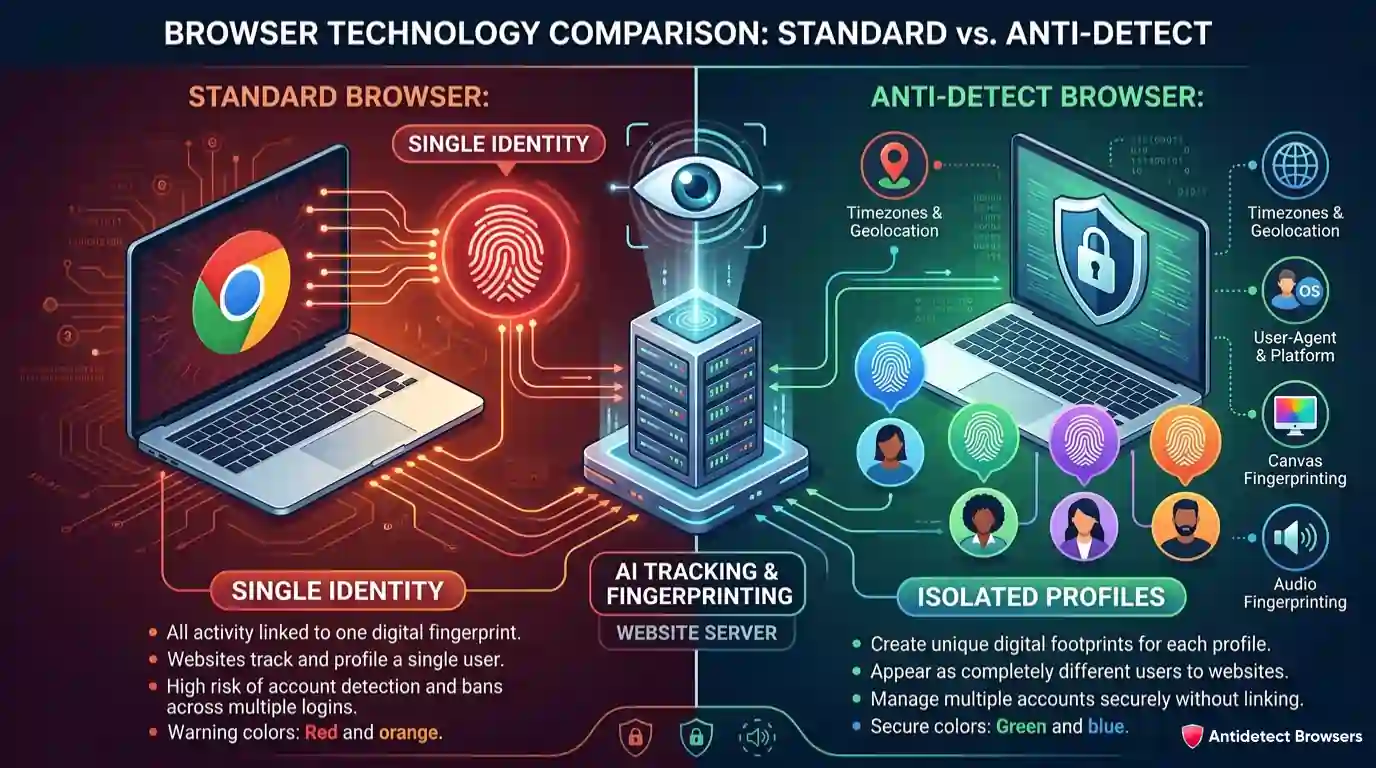
An anti-detect browser is a privacy tool that creates isolated browsing profiles. Each profile has its own unique fingerprint. Websites see each profile as a separate device and user.
Standard browsers like Chrome or Firefox share a single identity across every tab and session. Anti-detect browsers change that by spoofing parameters such as:
In 2026, detection systems have reached 98%+ accuracy using AI and behavioural analysis. Platforms now track micro-movements, device signals, and login patterns. Even a VPN alone cannot protect multiple accounts from being linked.
Anti-detect browsers counter this by isolating cookies, local storage, and session data per profile. Popular options like Multilogin, GoLogin, and AdsPower each offer unique browser engines built on Chromium or Firefox cores.
Why Affiliate Marketers Need Anti-Detect Browsers in 2026
Affiliate marketing in 2026 is more automated and more heavily monitored than ever before. Ad networks like Facebook, Google, and TikTok use advanced fingerprinting systems to detect multi-account behaviour. A single slip can get your entire operation flagged.
Here is why anti-detect browsers matter for affiliates:
Traffic quality checks now rely on machine-learning models that track device behaviour. Standard browser setups expose fingerprints even when you switch IPs. Anti-detect browsers solve that problem at the browser level.
Are Anti-Detect Browser s Legal Under US Federal Law?
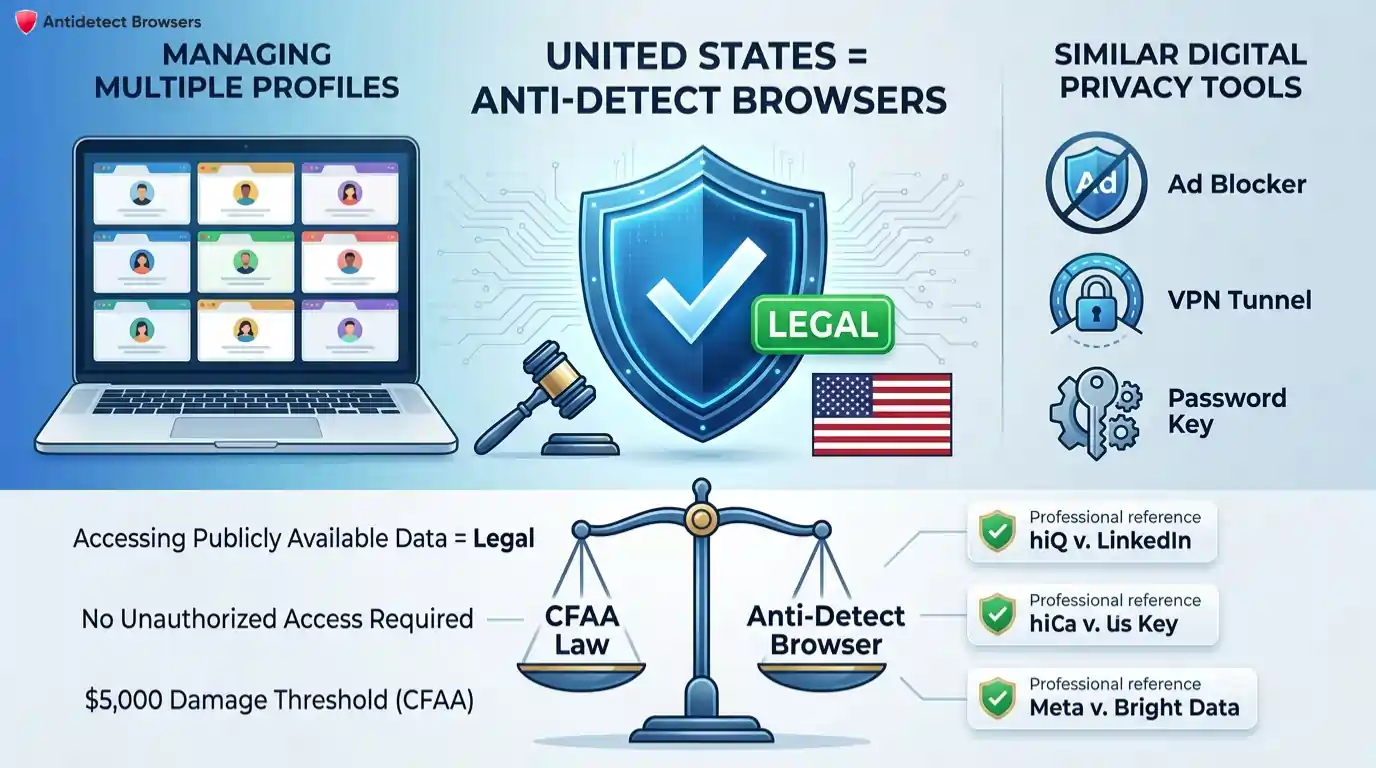
Yes. Anti-detect browsers are legal software under US federal law. No criminal statute prevents you from installing, owning, or operating browser management tools on your own devices.
The key law here is the Computer Fraud and Abuse Act (CFAA). It governs digital access crimes. But running multiple browser profiles does not trigger CFAA violations. You are using software on systems you own to manage accounts you control. No unauthorised access occurs.
Federal prosecutors focus on intent and damage. The CFAA requires a $5,000+ damage threshold for felony charges. Running isolated browser profiles generates no system damage.
Compare anti-detect browsers to other legal tools:
All operate legally because software ownership grants modification rights. Anti-detect browsers fall into the same category.
The hiQ v. LinkedIn case confirmed that accessing publicly available data does not violate the CFAA. The Ninth Circuit ruled twice in favour of public data access. In 2024, the Meta v. Bright Data ruling reinforced this, stating that scraping public information remains legal regardless of platform objections.
GDPR, Data Privacy, and Anti-Detect Browser Compliance
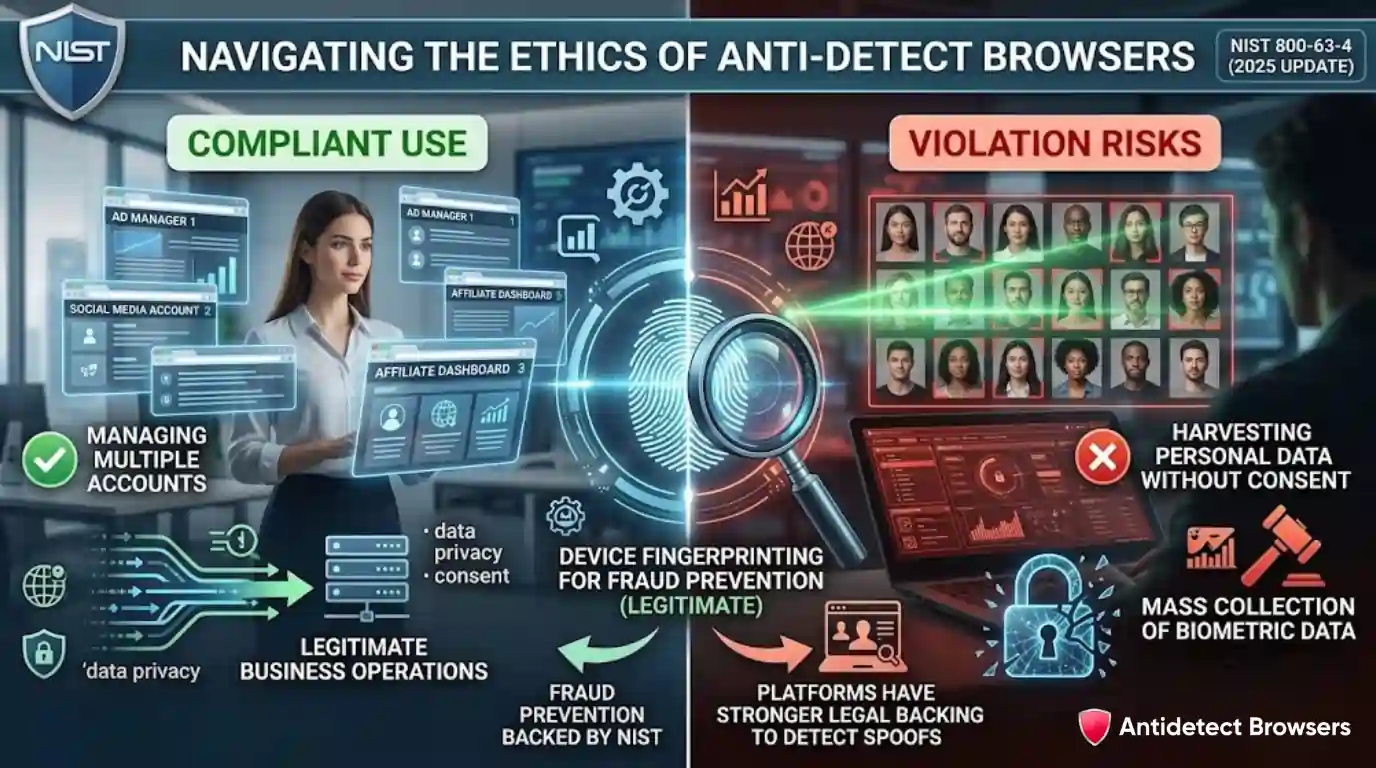
In the EU and UK, data protection laws like GDPR add another layer. Anti-detect browsers themselves do not violate GDPR. But how you collect and process personal data using them can.
Key GDPR considerations for affiliate marketers:
If you run campaigns targeting EU or UK audiences, ensure your data practices comply with regional regulations. Using an anti-detect browser for managing multiple advertising accounts is fully compliant. Using one to harvest personal data without consent is not.
The NIST Digital Identity Guidelines (SP 800-63-4), updated in 2025, now formally recognise device fingerprinting as a legitimate fraud prevention measure. Platforms have stronger legal backing to detect spoofed identities, which means your anti-detect setup must be more sophisticated than ever.
Platform Terms of Service vs. Criminal Law
Here is an important distinction many affiliates miss. Violating a platform's terms of service is not a criminal offence. It is a civil matter.
If Facebook or Google bans your account for using multiple profiles, that is a terms of service violation. It can result in account suspension or permanent bans. But it does not create criminal liability under standard usage.
| Aspect | Criminal Law (CFAA) | Platform Terms of Service |
|---|---|---|
| Violation type | Unauthorised system access | Policy breach |
| Consequence | Fines, prosecution | Account ban, suspension |
| Damage threshold | $5,000+ for felony | No threshold needed |
| Intent required | Yes, to damage or access protected data | No, any breach counts |
| Applies to anti-detect use | Rarely, unless fraud involved | Often, if detected |
The real risk for affiliates is not criminal prosecution. It is losing accounts and revenue. Platforms can ban you without warning. That is why choosing a reliable anti-detect browser with regular updates matters more than ever.
How Browser Fingerprinting Has Evolved by 2026
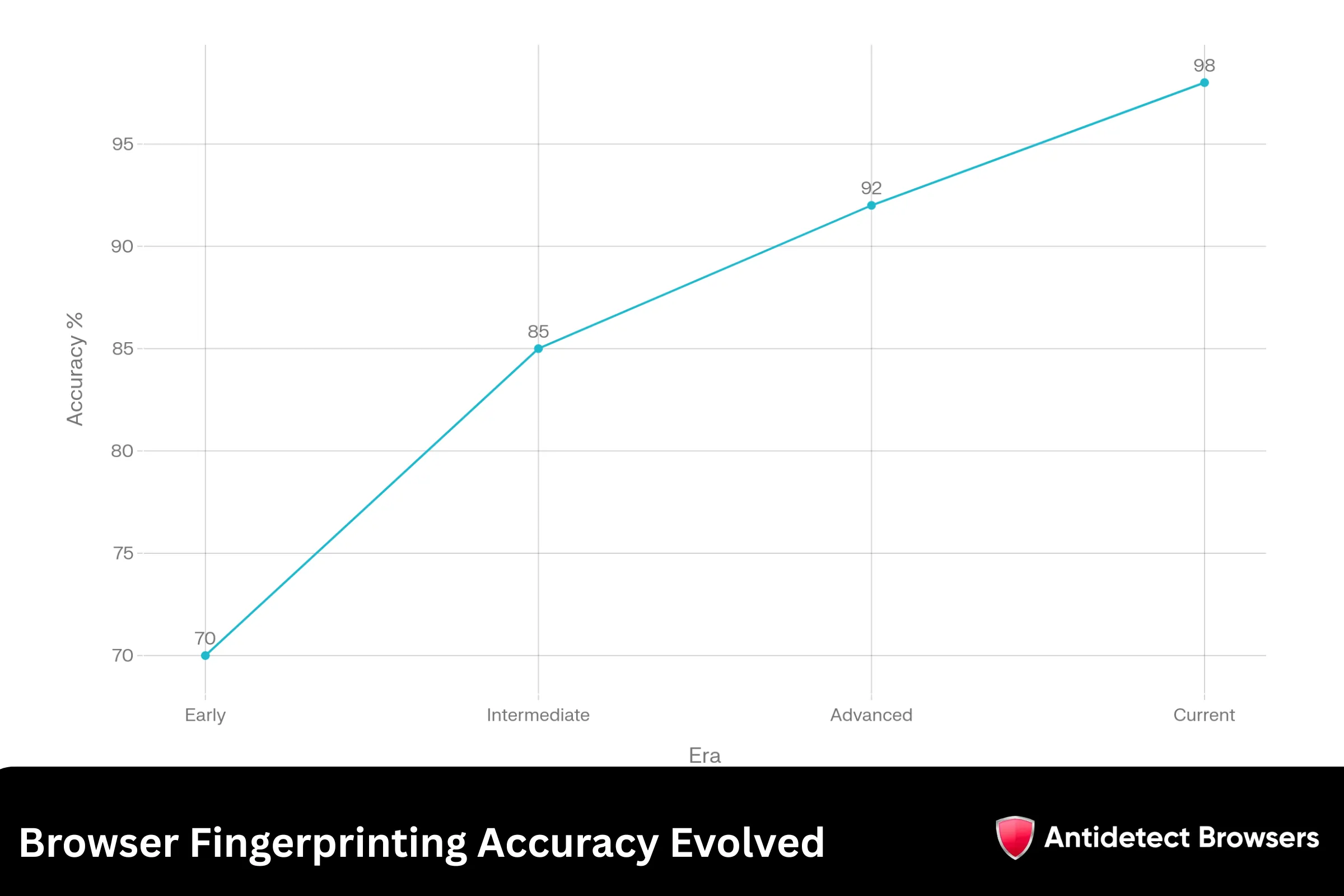
Detection technology has changed dramatically. Understanding how fingerprinting works helps you stay ahead.
| Era | Primary Method | Accuracy |
|---|---|---|
| 2010s | Basic browser info | 70% |
| 2020 | Canvas + WebGL | 85% |
| 2023 | Multi-vector analysis | 92% |
| 2026 | AI + Behavioural tracking | 98%+ |
Modern detection happens at the transport layer before JavaScript even loads. Platforms now evaluate TLS handshakes, HTTP/2 behaviour, and protocol signatures before your page renders.
A patched Chromium build has a different TLS fingerprint than stock Chrome, and detection systems identify spoofed parameters instantly.
Anti-detect browsers that update browser cores regularly perform better. If an anti-detect tool is rarely updated, its footprint becomes atypical and easier to flag. Always check when a provider last updated its engine.
How to Use Anti-Detect Browsers Legally and Safely
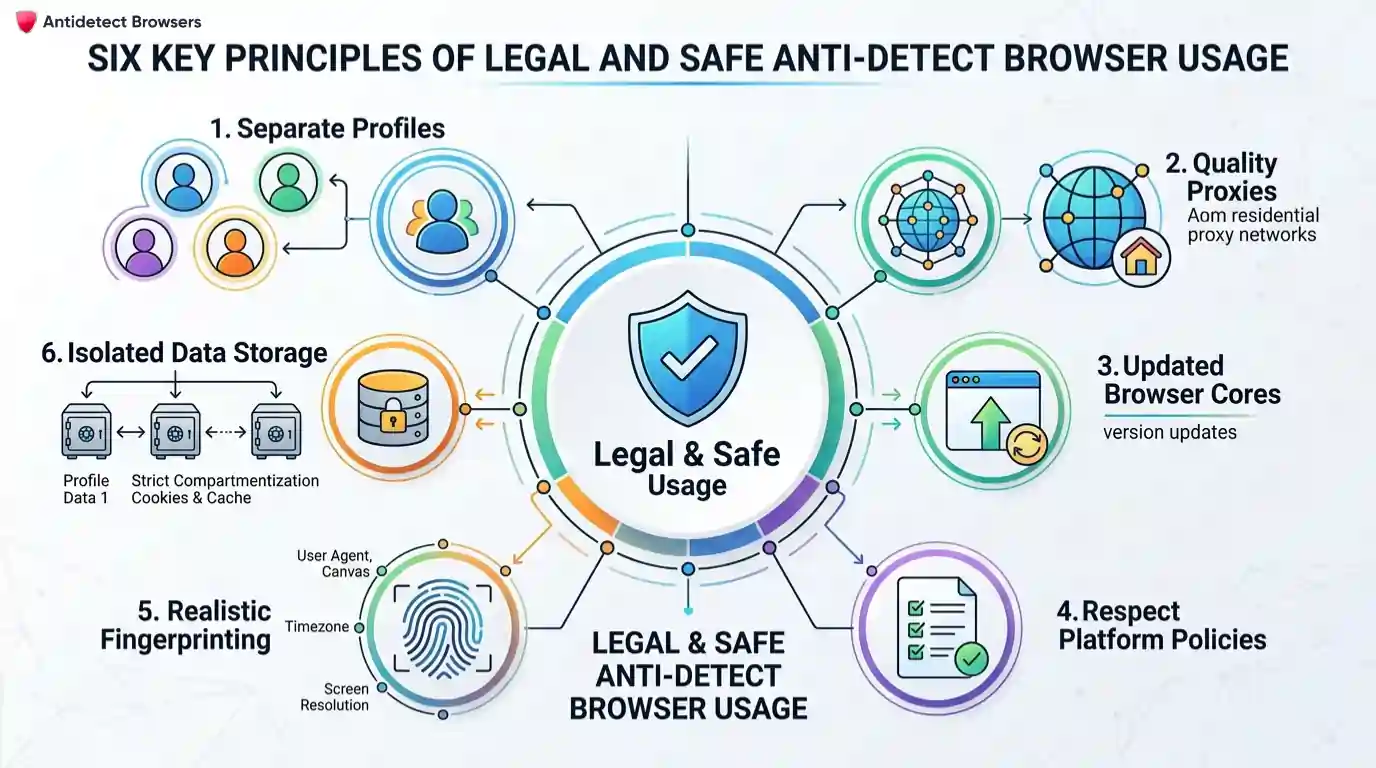
Staying on the right side of the law comes down to intent and practice. Follow these principles:
Anti-detect browsers are tools. Like a kitchen knife, legality depends entirely on how you use them.
What the Future Holds for Anti-Detect Browser Regulation
Regulation around online privacy tools and browser fingerprinting continues to shift. Google's push to classify anti-bot systems as DMCA-protected access controls could change the game. If successful, bypassing detection measures might become illegal regardless of public data status.
The remote browser isolation market is projected to hit $5.35 billion by 2032, showing massive enterprise investment in detection.
Meanwhile, anti-detect browser providers are racing to match updates. Affiliate marketers who stay informed and use these tools responsibly will maintain an edge. Those who ignore legal boundaries risk losing far more than a few ad accounts.
Anti-detect browsers are legal, powerful, and necessary for scaling affiliate operations in 2026. Use them wisely, stay updated on regulations, and always prioritise legitimate business practices over shortcuts.