Ten fresh TikTok accounts on Monday. By Friday, three are dead and you still can't tell which one leaked the fingerprint.
That is the actual problem behind GoLogin vs Multilogin. Both are antidetect browsers built for multi-account management. Both hand every profile its own browser fingerprint, bundle residential proxy traffic, and keep sessions walled off from each other so one ban doesn't cascade.
GoLogin
Multilogin
Where they split is what they've been rebuilt around since 2024. GoLogin went wide and cheap: 100 profiles for $24/mo, a scraping API, a Web Unlocker, Cloud Android sitting inside the desktop app. Multilogin went deep on mobile, pairing browser profiles with real Android cloud phones across 190+ countries and aiming the whole thing at social media growth.
We paid full price for both, no review seats, and spent a week running live TikTok and Instagram accounts on each.
Short version: Multilogin takes 2026 by a nose, mostly on its dual engines (Mimic and Stealthfox) and the depth of its cloud phone stack. GoLogin wins on price, on scraping muscle, and on being the gentler tool to learn if this is your first antidetect browser.
What follows is the tested breakdown. Fingerprint engines, cloud phone billing per minute versus flat access, proxy allowances, real 2026 plan costs, and the small daily annoyances neither pricing page mentions. 👇
What GoLogin Is and Who Actually Runs It
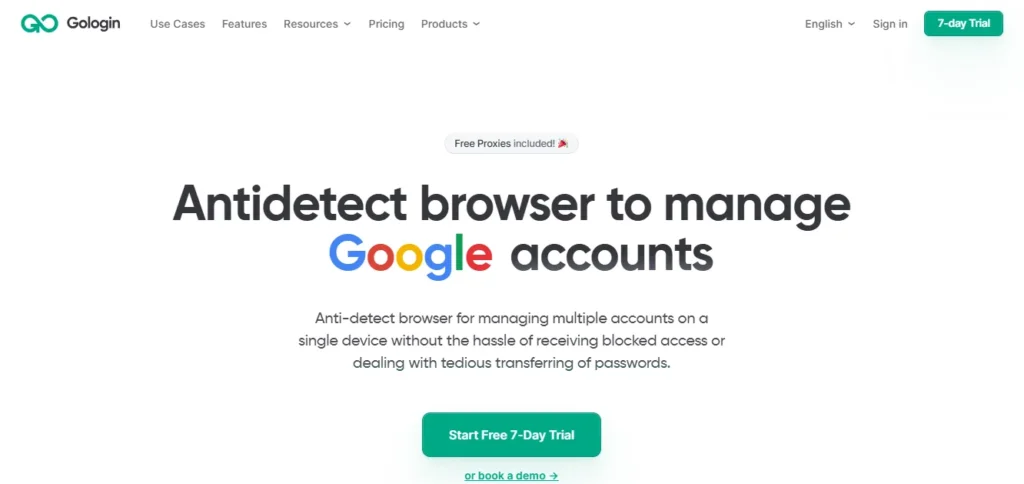
A budget-friendly antidetect browser that has slowly grown a mobile and cloud side.
GoLogin is an antidetect browser for multiple accounts, built on a Chromium engine called Orbita. Each profile gets its own device fingerprint, so sites treat every login as a separate person.
Over 15,000 customers manage more than 1.5 million accounts on it. Ratings sit at 4.8/5 on G2 and 4.6/5 on Capterra. Recently GoLogin bolted on Cloud Android, an AI Assistant, a Web Unlocker and a scraping API, turning a simple browser into a wider toolkit.
It runs on Windows, macOS, Linux, plus native Android and iOS apps and a web version. The pull is obvious: loads of profiles, low price, quick setup.
Multilogin Explained: Browser Profiles Paired with Real Android Phones
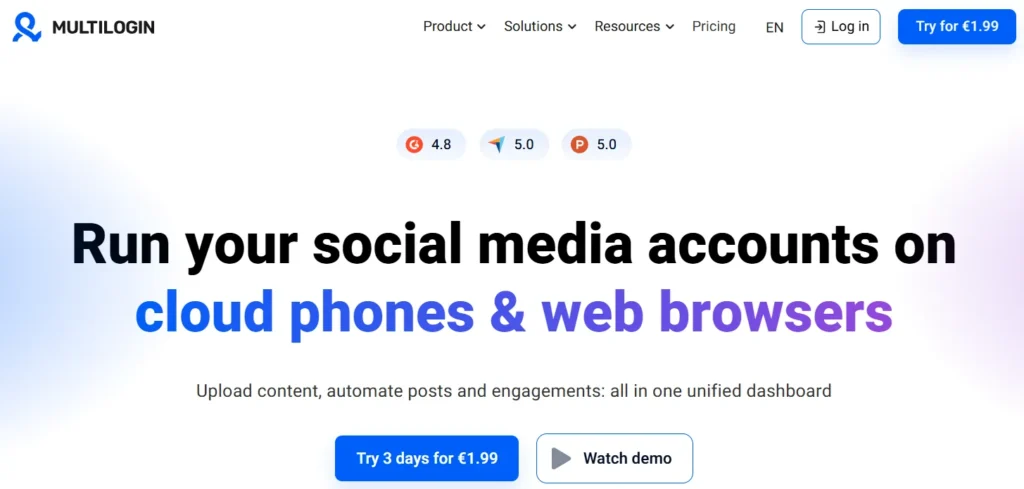
A 2-in-1 platform pairing browser profiles with genuine Android cloud phones.
Multilogin started as a premium antidetect browser and has now repositioned as a cloud phone platform for social media growth. It pairs isolated browser profiles with real Android cloud phones in one dashboard.
Two engines power it: Mimic (Chromium-based) and Stealthfox (Firefox-based). That Firefox option alone sets it apart from most rivals stuck on a single kernel.
Scores are strong: 4.8 on G2, 5.0 on Capterra, 5.0 on Product Hunt, with ten years behind the brand. Mobile app accounts run on true Android devices, web accounts run in browser profiles, and both share one clean control panel.
GoLogin vs Multilogin: Quick Comparison at a Glance
| Feature | GoLogin | Multilogin |
|---|---|---|
| Core positioning | Antidetect browser + add-ons | Cloud phones + browser profiles |
| Fingerprint engines | Orbita (Chromium 140) | Mimic + Stealthfox (Chrome & Firefox) |
| Fingerprint parameters | 50+ (around 53) | 50+ across two engines |
| Cloud phones | Cloud Android (included in paid plans) | Android 10-16, 30+ models, 190+ countries |
| Mobile billing | Included, capped concurrency | Mobile minutes, $0.0073/min, rollover |
| Free plan | 3 profiles forever | 5 profiles, 200 MB proxy, 30 mobile min |
| Entry paid price | $24/mo (annual), 100 profiles | $7.08/mo (annual), 10 profiles |
| Built-in proxies | 2 GB residential on every paid plan | From 1 GB, add $3.50/GB, rolls over |
| AI + scraping | AI Assistant, Web Unlocker, Scraping API, MCP | AI agents, AIGC, AI Influencer, ADB/Selenium |
| Team seats | From Business tier upward | Unlimited on Business |
| Ratings | G2 4.8 / Capterra 4.6 | G2 4.8 / Capterra 5.0 |
Fingerprint engines put head to head 🔬
How each tool spoofs a device, and which masking holds up better under checks.
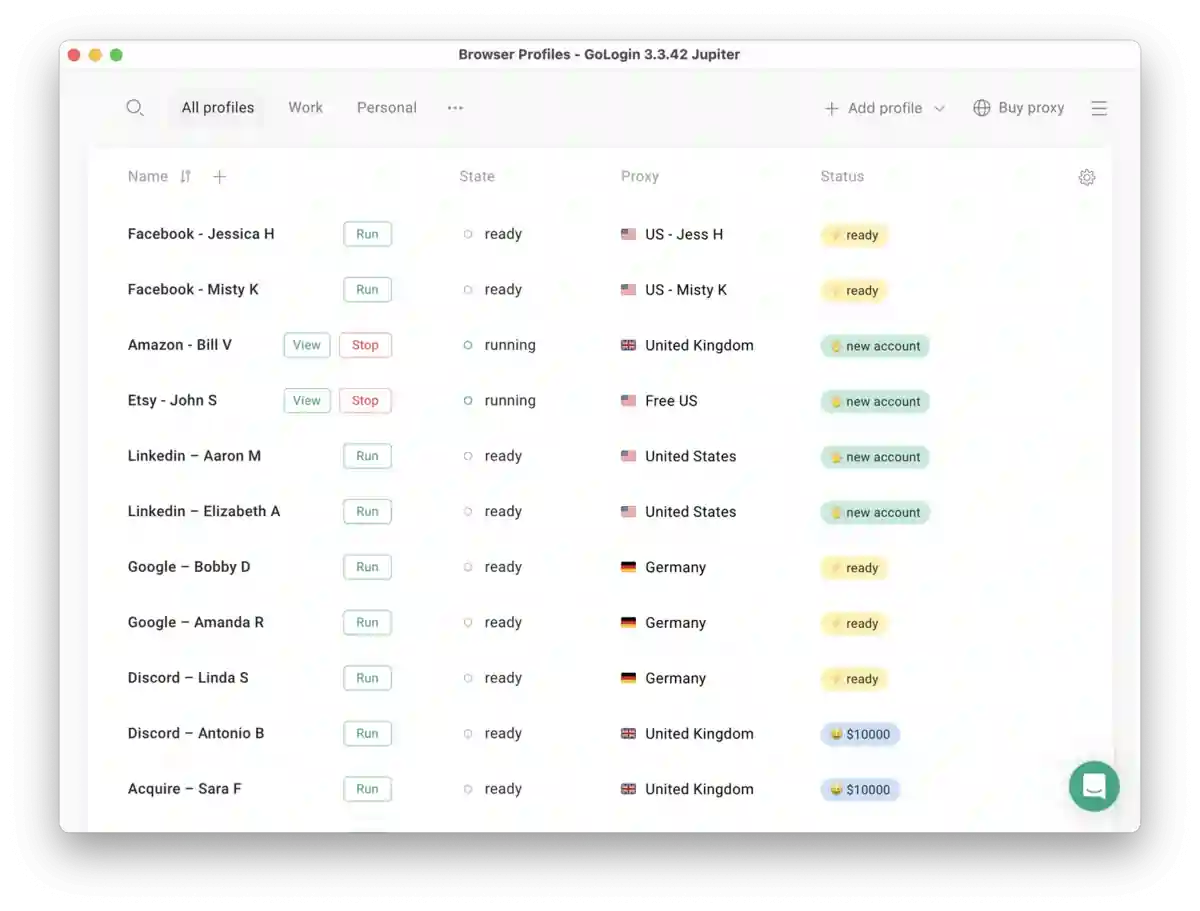
This is where the gap first shows. GoLogin runs one engine, Orbita, a Chromium fork. It handles over 50 browser fingerprint parameters like canvas, WebGL, fonts, audio and hardware hints.
Orbita does the job cleanly on most sites. One snag turned up during testing: its Chromium version sometimes trails the newest Chrome by a release. Detection tools watch such mismatches, so a lagging kernel raises a small risk on strict platforms.
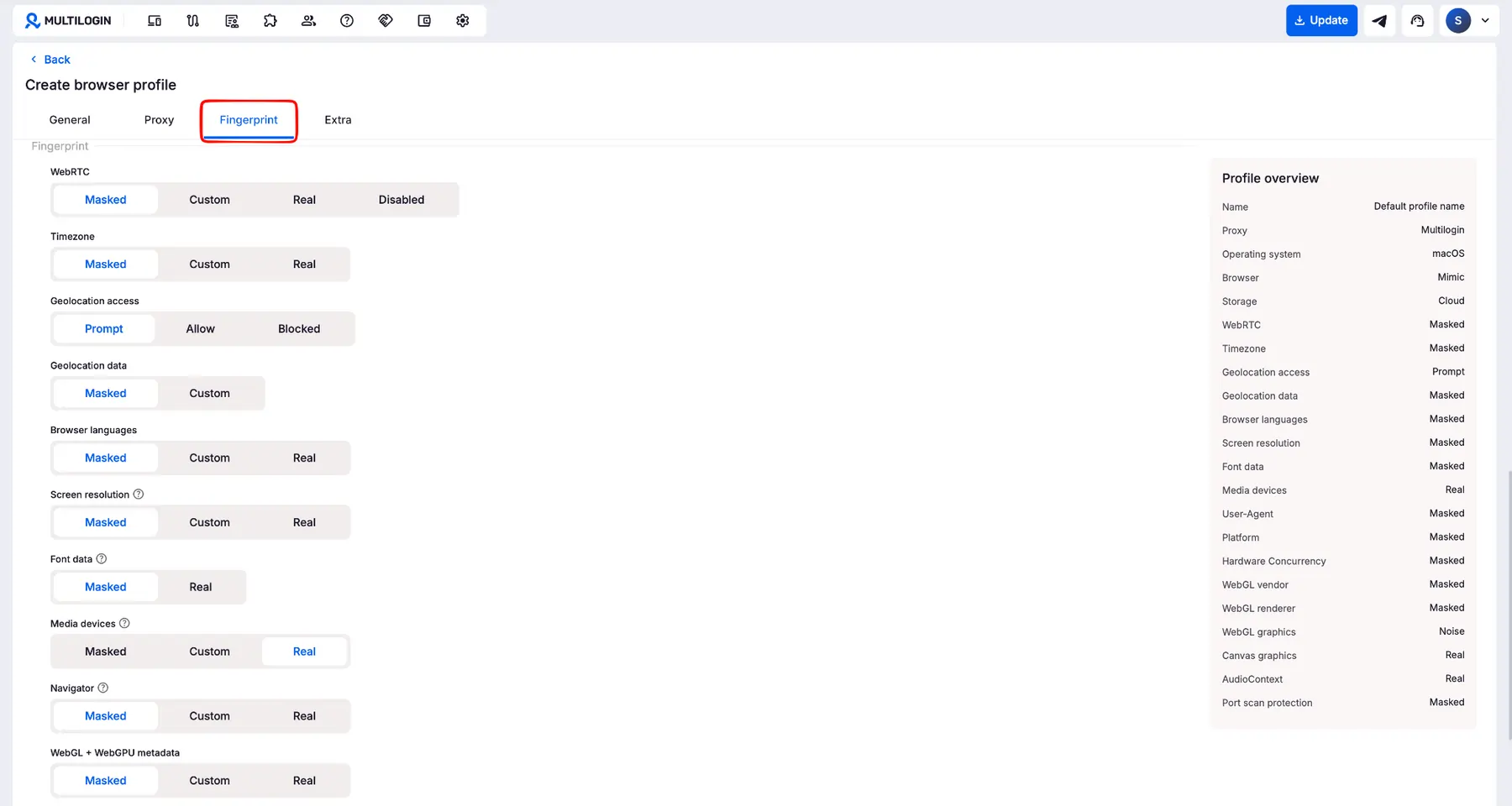
Multilogin plays a different card with two separate browser engines. Mimic mirrors Chrome, Stealthfox mirrors Firefox. When a site fingerprints Chrome users heavily, a Firefox-shaped profile slips past patterns that trip up everyone else.
Both faked our test rigs well. On fingerprint checkers, spoofed values passed on each tool. Two engines simply give Multilogin a second escape route, and that flexibility counts on the harshest sites.
🏆 Winner: Multilogin (two engines beat one)
Android Cloud Phones Tested on TikTok and Instagram
The mobile stack is the biggest split, and it decides a lot of buyers in 2026.
Mobile-first apps like TikTok and Instagram expect a phone, not a desktop. Both tools answer that now, but the depth differs sharply.
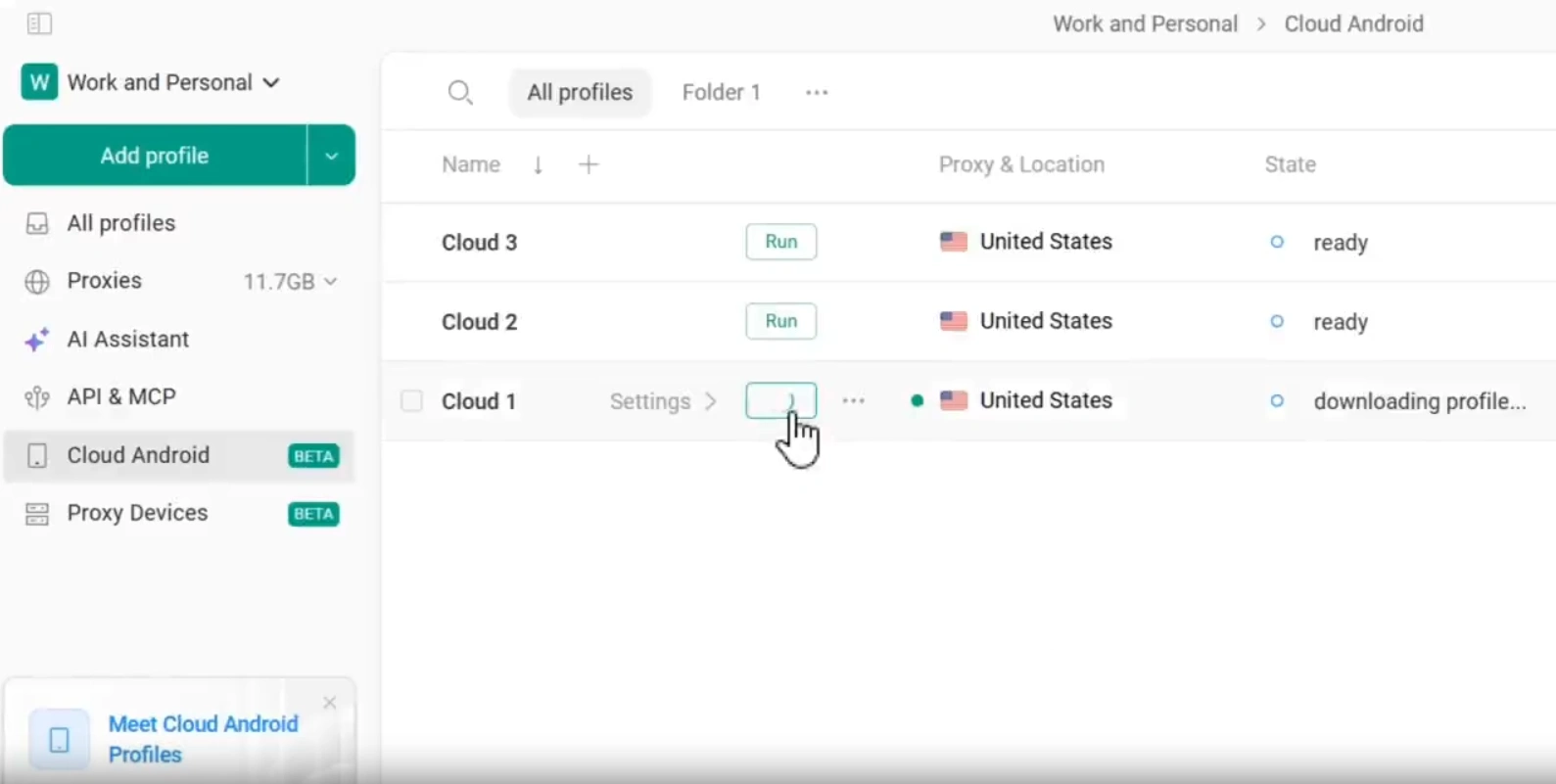
GoLogin's Cloud Android arrived in the desktop app during 2026. Launch a virtual smartphone, install APKs from Google Play, warm up accounts, save the phone state. Handy, and it sits inside paid plans with no extra maths.
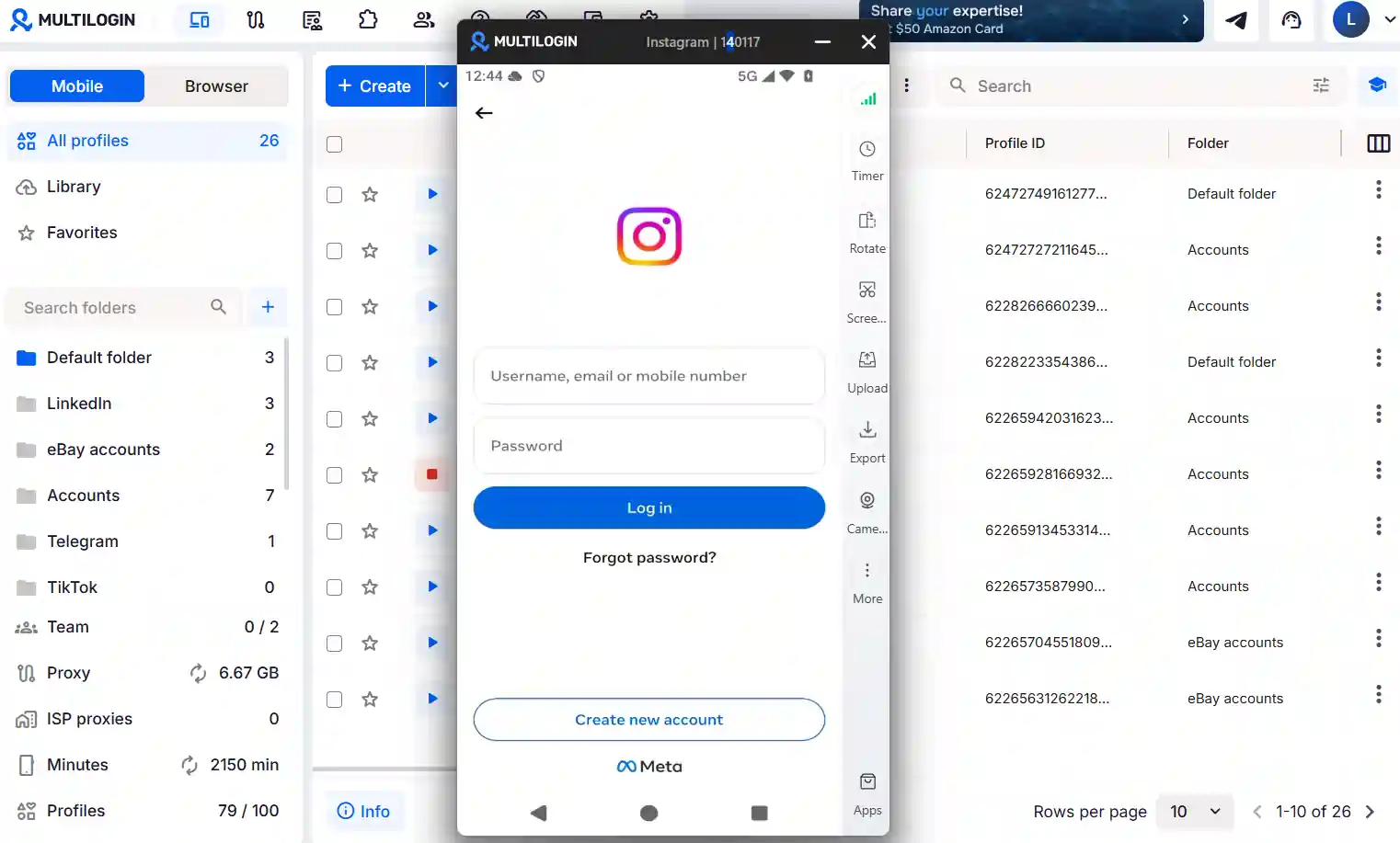
Multilogin's mobile suite goes far deeper. It offers real Android cloud phones across Android 10 to 16, roughly 30 device models, and locations spanning 190+ countries.
On top of that come a remote phone with real phone numbers plus GPS matched to location, cloud Android emulation, phone farming and virtual phones. A full mobile toolkit, not a single feature.
🏆 Winner: Multilogin (deeper mobile stack)
Cloud Phone Billing: Per-Minute Meter vs Flat Access
The pricing model behind mobile use, and why heavy phone users lean one way.
Money mechanics matter as much as features here. Both charge differently once phones enter the picture.
Multilogin bills cloud phones by the minute. Paid plans bundle a set allowance (60 minutes on the entry tier), then top-ups run about $0.0073 per minute. Unused minutes roll over, which softens quiet weeks.
Still, minute-watching adds mental load. Anyone farming phones eight hours a day will burn allowance fast and pay the overage.
GoLogin skips per-minute charges entirely. Cloud Android comes baked into paid plans, capped instead by simultaneous launches (one on the entry tier, two on the mid tier). Predictable, flat, no timer anxiety.
Light or occasional mobile use favours Multilogin's rollover. Long daily phone sessions on a fixed budget favour GoLogin's flat model, which keeps bills calm and steady.
🏆 Winner: GoLogin (no minute-by-minute meter)
Social Media Account Scaling Tested Day by Day
Which tool feels built for scaling TikTok, Instagram and Reddit right now.
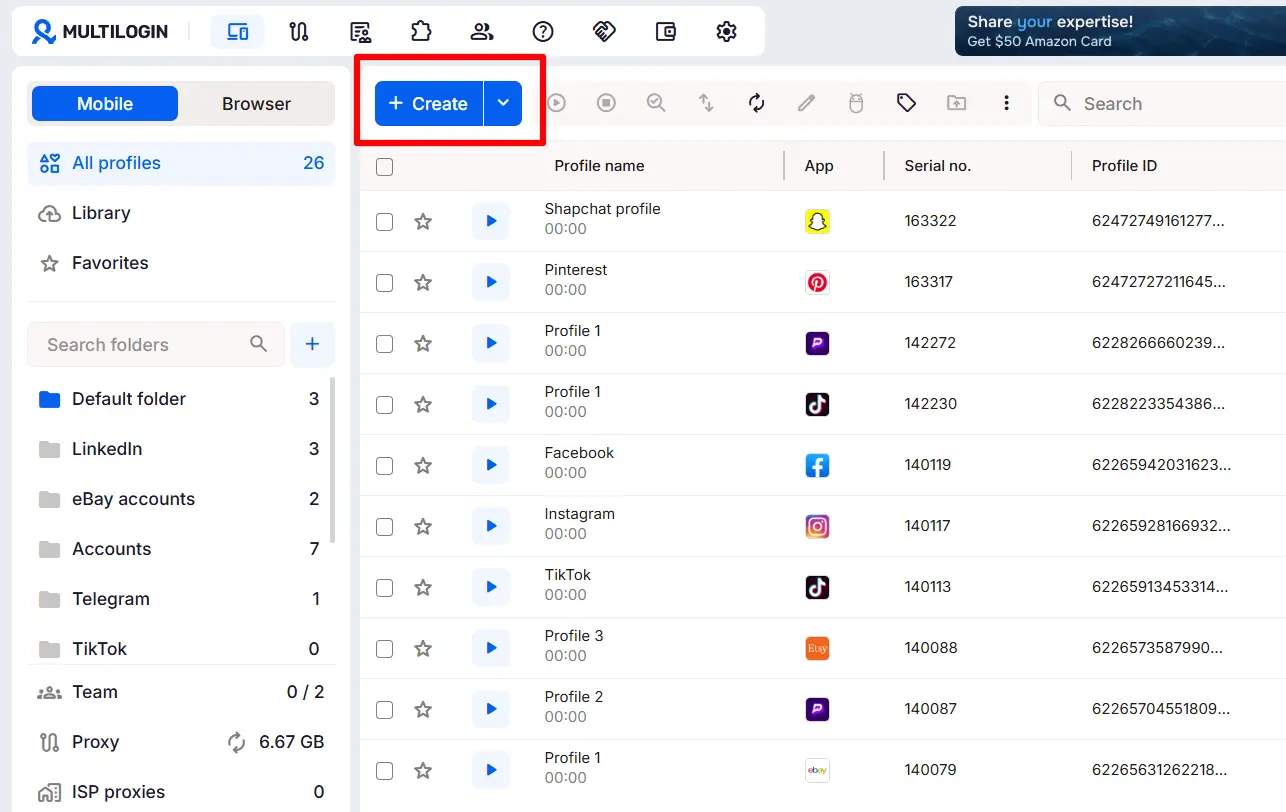
Multilogin has clearly aimed itself at multiple social media accounts as a core job. Upload content, schedule posts, automate engagement, and grow profiles from one panel.
During our week, spinning up fresh TikTok profiles on real Android devices felt natural. Apps behaved as they would on a physical handset. Account warmup went smoothly with no odd flags.
GoLogin handles social accounts too, and does it well on the browser side. Its focus stays wider though, covering scraping, ad testing, dropshipping and crypto tasks equally.
The tested platform list ran past 50 sites, from TikTok and Reddit to Amazon and Fiverr. Posting cadence stayed steady, and engagement actions triggered no captcha walls on the mobile side.
So GoLogin is a strong generalist. Multilogin becomes the sharper pick when social growth on mobile-first platforms is the whole point.
🏆 Winner: Multilogin (built around social growth)
Web Scraping and Automation: APIs, Unlockers, AI Assistants
Automation, AI helpers and data collection, where GoLogin quietly pulls ahead.
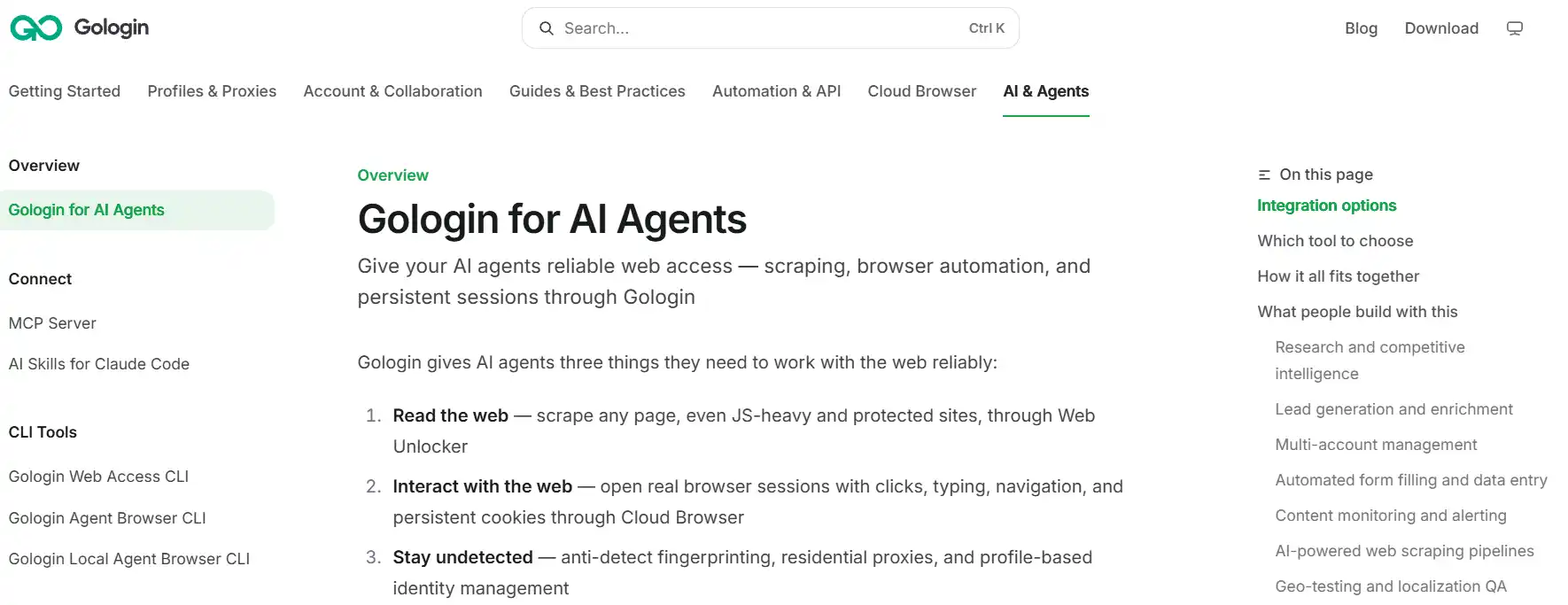
Here GoLogin flexes. Its recent push into automation and AI gives it a wider kit than most antidetect rivals.
That combo suits data teams and developers who want scraping and automation under one roof.
Multilogin answers with AI agent connections (ADB, Selenium, Puppeteer, Playwright), AIGC content management and an AI Influencer mode. Solid, yet aimed more at posting than at large-scale data pulls.
Give a nod here to GoLogin. Its scraping and unlocking layer runs broader for anyone gathering data at volume.
🏆 Winner: GoLogin (scraping and unlocker depth)
Proxies baked into each plan 🌐
Bundled traffic keeps costs down, so the included proxy deal really counts.
Nobody wants to juggle a separate proxy bill. Both fold proxies into subscriptions, with a twist on each side.
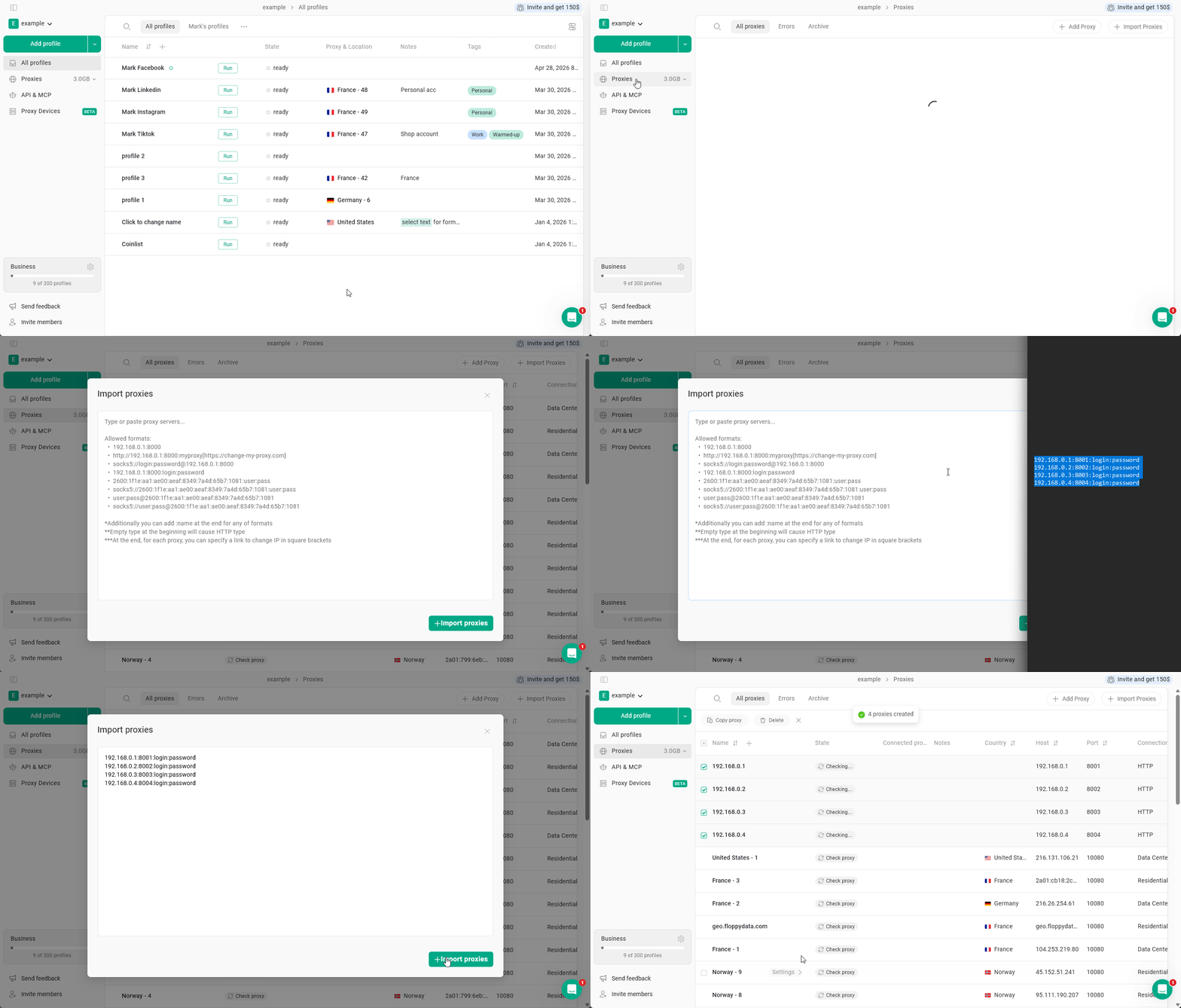
GoLogin ships 2 GB of built-in residential proxy traffic on every paid plan, plus mobile and datacenter options across 100+ countries. A flat 2 GB feels generous at the entry level.
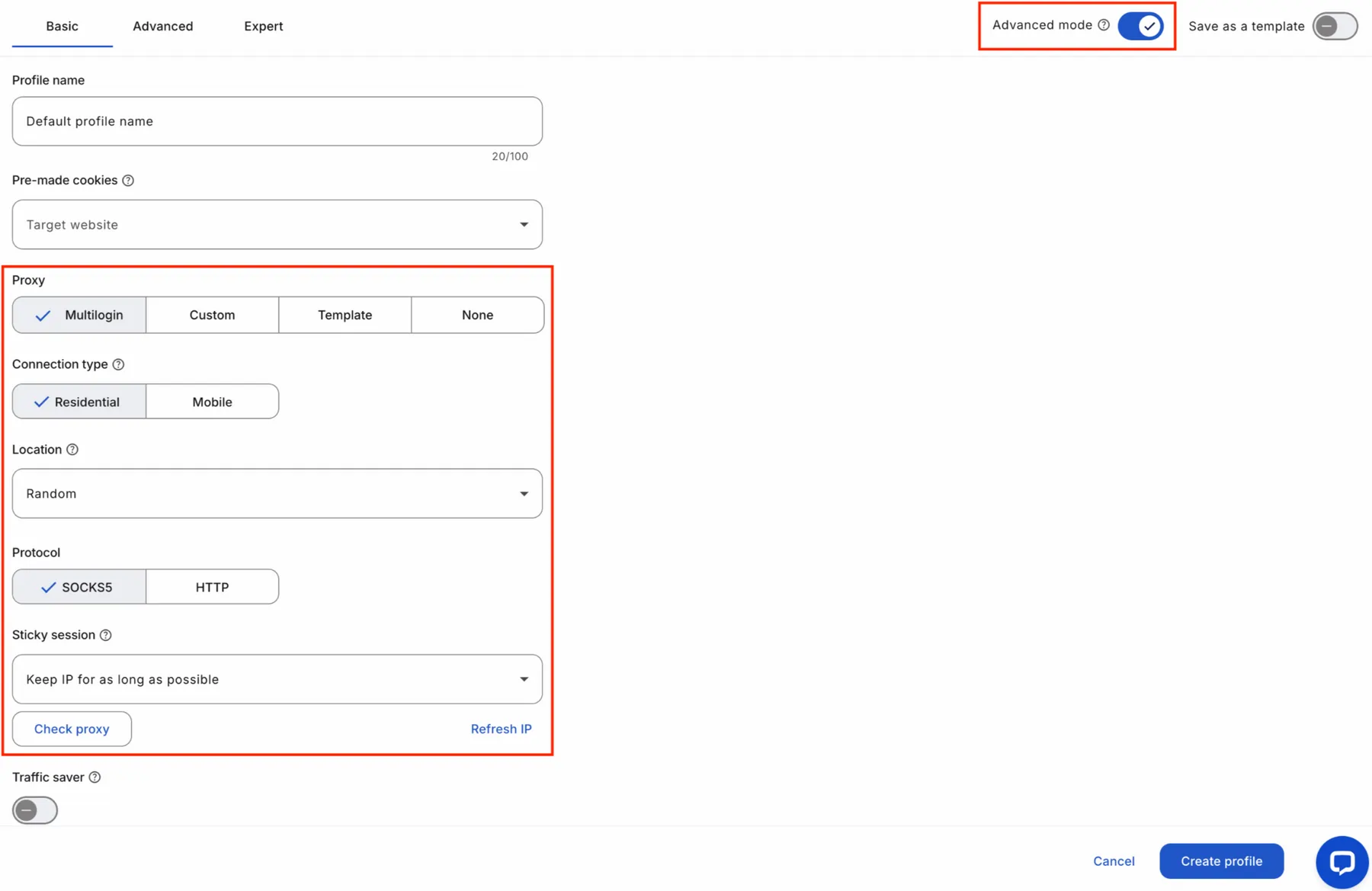
Multilogin includes proxy traffic too (from 1 GB on the first paid tier), with top-ups near $3.50 per GB. The clever part: leftover traffic rolls over month to month, and platform-specific proxy bundles exist for TikTok, Instagram, Reddit and more.
Rollover and mobile-tuned bundles give Multilogin the smarter long-run deal, even if GoLogin hands over more raw gigabytes on day one.
🏆 Winner: Multilogin (rollover and mobile bundles)
Browser kernel freshness and safety 🛡️
A fresher engine stays consistent with real traffic, which lowers ban odds.
Detection tools compare a profile against millions of genuine visitors. Consistency is everything, so the underlying engine version matters more than people assume.
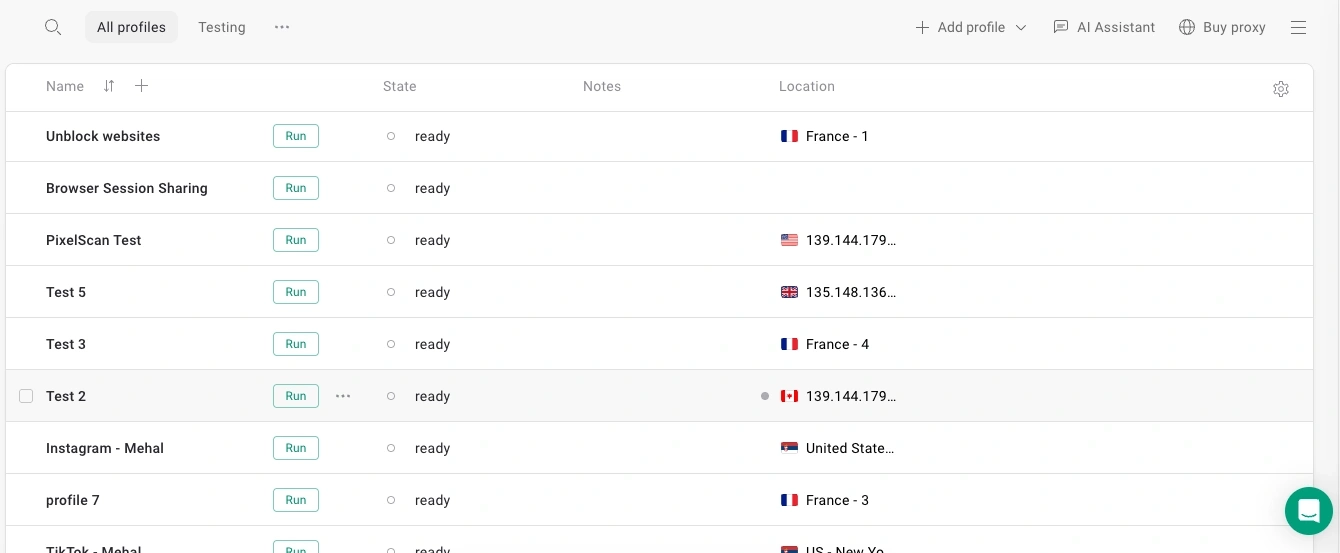
GoLogin's Orbita sat on Chromium 140 in early 2026. Good, updated often, yet sometimes a step behind the newest public Chrome. On very strict platforms, a small gap like that can nudge a profile toward suspicion.
Multilogin keeps Mimic close to current Chrome and offers Stealthfox as a Firefox alternative. Having a non-Chromium path means one engine can cover when a site tightens checks.
Both stayed safe in normal use. Multilogin's two-engine safety net simply grants more room when a platform gets aggressive.
🏆 Winner: Multilogin (fresher, dual-kernel cover)
Cross-device access and portability 🔗
Checking accounts from a phone or a borrowed laptop, without breaking sessions.
Real work rarely stays on one machine. Both tools store profiles in the cloud so a session can move.
GoLogin shines on portability. It packs native iOS and Android apps, a full web app, and the downloadable Orbita browser for zero-latency local runs. Swap laptops, sign in, and profiles launch on a safe cloud server with no re-sync.
Its mobile app does carry limits: sessions may not persist, and only one profile launches at a time. Fine as a companion, not a full desktop replacement.
Multilogin also supports cloud and local storage, plus mobile access. Its browser mobile side stays younger than GoLogin's, which has had native apps longer.
On pure reach across devices, GoLogin's mature app spread earns the point.
🏆 Winner: GoLogin (broader device reach)
Account isolation and profile cloning 🧬
Keeping profiles unlinked, plus how fast a clean copy spins up.
One flagged account should never drag the rest down. Both tools wall off each profile so cookies, storage and canvas noise stay separate.
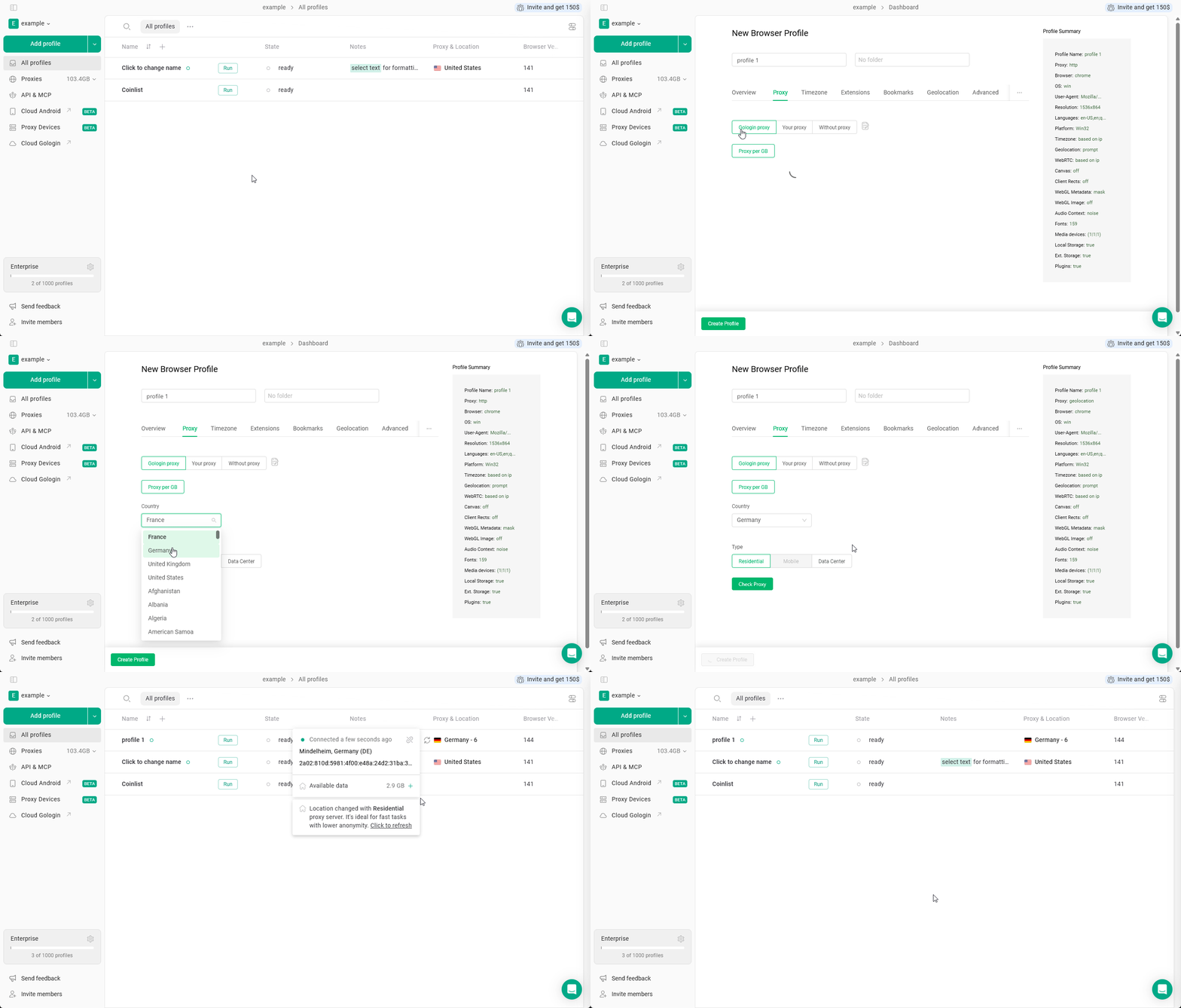
GoLogin leans on bulk handling. Create, rename, clone or delete hundreds of profiles with one-click bulk actions. Cookie import and pre-built fingerprint templates get a fresh profile looking authentic from its first request.
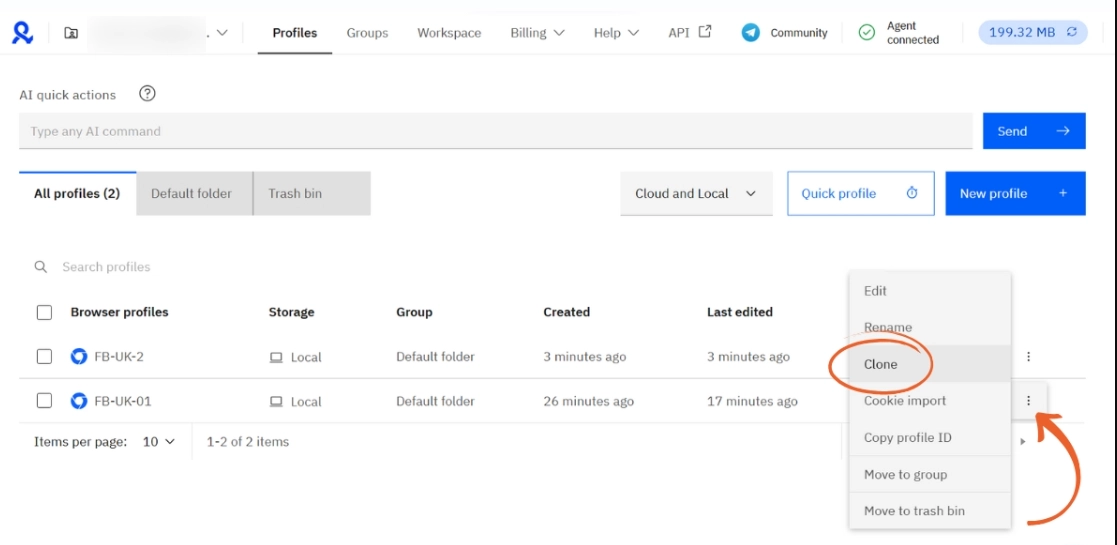
Multilogin pushes strong account isolation further on mobile. Each app account runs on its own Android cloud phone, so two TikTok logins never share a device or a trace. That hardware-level split is tough to beat.
Both clone browser profiles quickly. Multilogin's per-device mobile separation gives it the tighter seal where bans hurt most.
🏆 Winner: Multilogin (hardware-level isolation)
Ease of use for new starters
Time to first profile and how quickly a beginner stops feeling lost.
First impressions shape whether people stick around. We handed each dashboard to a fresh tester with zero antidetect history.
GoLogin felt like a slightly locked-down Chrome. Create profile, assign proxy, hit play. Bulk actions, folders, statuses and notes keep hundreds of accounts tidy through a fast drag-and-drop panel.
Multilogin is clean as well, with a neat table, folders on the left, and a Mobile/Browser toggle up top. Yet the added mobile layer means a touch more to learn on day one.
Both stay friendly. GoLogin's narrower scope makes the very first hour a little smoother on a complete newcomer.
🏆 Winner: GoLogin (simpler first hour)
Pricing and Real Value in 2026
Full plan costs, what each tier unlocks, and where the money genuinely goes.
Here comes the part everyone scrolls to. Prices below are 2026 annual rates from each official pricing page.
GoLogin plans and costs
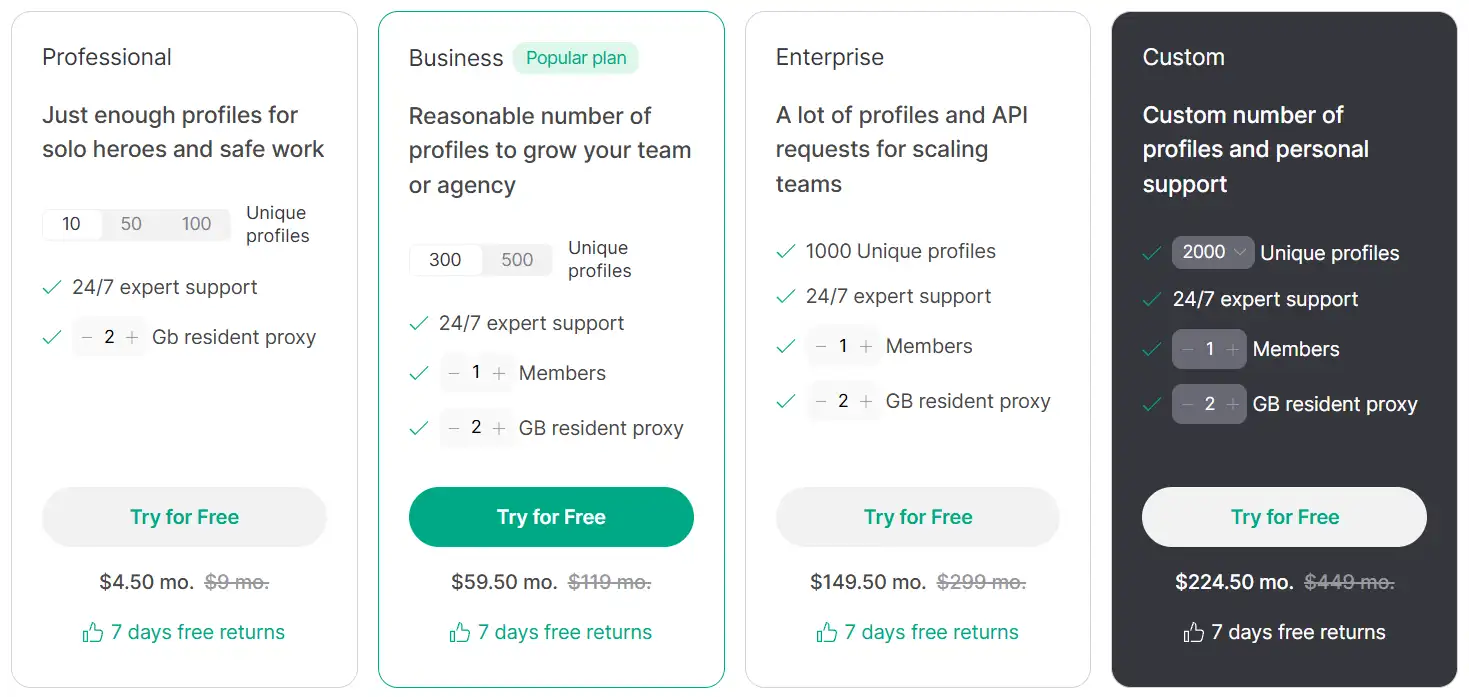
GoLogin keeps a free forever tier and undercuts most rivals on paid plans.
Every paid plan bundles 2 GB residential proxies, 24/7 support and a 7-day trial. Annual billing halves the monthly rate.
Multilogin pricing plans
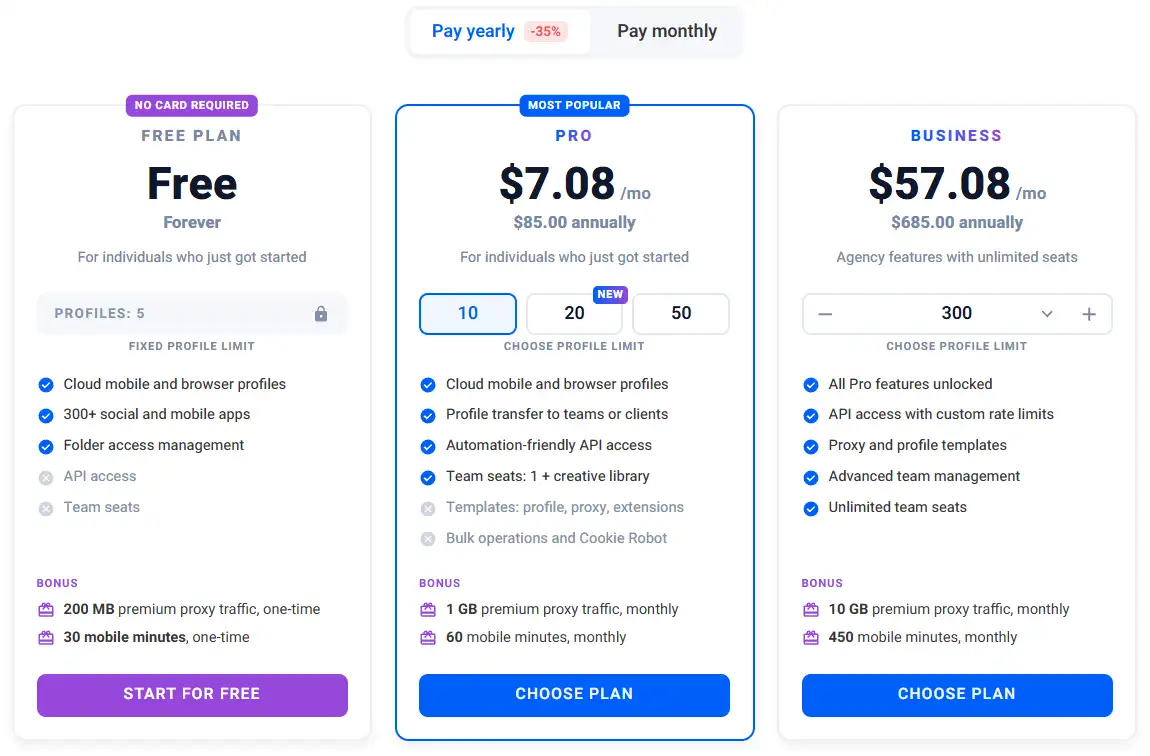
Multilogin dropped a free plan in mid-2026 and now starts far cheaper than its old premium days.
Annual billing saves roughly 35% versus monthly. Cloud phones and browser profiles come standard on every tier.
💥 Multilogin discount code: use BROWSER50 at checkout for 50% off monthly plans. Handy when a monthly run makes more sense than a yearly commitment straight away.
Honest verdict on value: GoLogin gives more profiles per dollar and a bigger flat proxy pot. At $24/mo for 100 profiles, few tools match it. Multilogin costs more once mobile minutes stack up, but bundles a whole phone platform into that price.
🏆 Winner: GoLogin (more profiles per dollar)
Real Testing Notes From our Desk
The small stuff that only shows up once a tool sits open all day.
Spec sheets hide the daily grit. A few honest notes from living inside both.
GoLogin loaded profiles fast and felt light on an older laptop. Its 24/7 real-time support answered our test ticket within minutes, backed by a three-minute response commitment through live chat, email and WhatsApp.
Multilogin held up under a heavier mobile load. Its support runs round the clock across five languages, with agents who actually use the tool daily. Replies felt sharper on mobile-specific questions.
Two rough edges stood out. GoLogin's phone app logged us out between profile launches, so treat it as a companion. Multilogin's mobile minutes ticked down quietly, so keep half an eye on the balance during long sessions.
Neither broke a sweat on normal loads. Support quality landed close, though GoLogin's speed pledge nudges it slightly on raw response time.
🏆 Winner: GoLogin (faster support pledge)
Who Should Choose Which Antidetect Browser
A quick match by job type, so the right pick becomes obvious fast.
No single answer suits everyone. Match the tool to the task and the choice clears up.
FAQs About Multilogin and GoLogin
Is Multilogin worth the higher price over GoLogin?
Yes, if mobile matters. Multilogin bundles real Android cloud phones, dual engines and social automation, which GoLogin only partly matches. Purely on cheap browser profiles at scale, GoLogin gives better raw value.
Can GoLogin's Cloud Android replace Multilogin's cloud phones?
Partly. GoLogin's Cloud Android launches virtual smartphones and installs APKs with no per-minute charge. Multilogin still leads on device models, 190+ country locations and a remote phone with real numbers.
Which tool spoofs browser fingerprints more reliably?
Multilogin, narrowly. Two engines (Mimic and Stealthfox) let a Firefox-shaped profile dodge checks aimed at Chrome. GoLogin's single Orbita engine still masks over 50 parameters well on everyday tasks.
Do both antidetect browsers include residential proxies?
They do. GoLogin bundles 2 GB residential traffic on every paid plan across 100+ countries. Multilogin starts near 1 GB with $3.50/GB top-ups, and any unused proxy traffic rolls into next month.
How do team seats and profile sharing compare?
Multilogin offers unlimited team seats on its Business tier. GoLogin keeps team members to Business plan and above, with extra seats bought separately, plus folder-level read or write sharing.
Are GoLogin and Multilogin safe for TikTok and Instagram?
Both work on mobile-first apps. Multilogin's real Android devices suit account warmup on TikTok and Instagram best. GoLogin handles browser-based social logins fine, with mobile fingerprints on lighter mobile jobs.
Does either support automation with Selenium or Puppeteer?
Yes on both. GoLogin adds a Scraping Browser API, Web Unlocker and MCP, hitting 1,200 requests a minute on top tiers. Multilogin connects AI agents through ADB, Selenium, Puppeteer and Playwright.
What is the cheapest way to start with each platform?
Both run a free plan. GoLogin gives 3 profiles forever, Multilogin gives 5 profiles plus 200 MB proxy and 30 mobile minutes. On paid entry, code BROWSER50 cuts 50% off Multilogin monthly plans.
Our Verdict and Final Winner
After a full week on both, here is where we landed and why.
Multilogin edges ahead as our 2026 overall pick, but only just. Its dual browser engines, mature Android cloud phones, deeper social growth tools and rollover proxies make it the stronger all-round platform on anyone serious about mobile-first accounts.
GoLogin stays a brilliant buy. It wins on price, scraping muscle, cross-device apps and a gentle learning curve. Solo operators and data teams on a budget will be very happy with it.
Our tested scores: Multilogin 4.8/5, GoLogin 4.6/5. Pick Multilogin to grow social accounts at scale. Pick GoLogin to run many profiles cheaply and scrape at volume.